The Siege of Portsmouth
The English Civil War, which began in 1642 during the reign of Charles I resulted in the monarch being executed by the order of Oliver Cromwell. England was then declared a Commonwealth. For eleven years, England was without a monarch - the only time in its history.
During the Civil War in 1642, Portsmouth's support was split, most people including the Mayor supported Parliament, but Colonel Goring the military governor of the town supported the King and had command of the soldiers based in the town.
The town itself was highly fortified and was supported by 100 cannon and 1400 barrels of gunpowder.
Parliamentarian forces assembled to the north of Portsea Island and were able to prevent supplies moving into the town.
George Goring the Town Governor was expelled from the House of Parliament due to his actions and seven parliamentarian warships were sent to Portsmouth, to prevent supplies being shipped into the town by sea from the Isle of Wight or the continent.
Over the coming days there were many skirmishes between the opposing forces, in one Goring's men were able to drag an abandoned cannon from Portsbridge into the town and in another the parliamentarian forces attacked a mill used by the town's people for grinding flour.
The only remaining Royalist ship in Portsmouth harbour the Henritta Maria was captured by a group of sailors led by Captain Browne Bushell.
Morale in the town was very low as supplies fell, the Parliamentarian attackers were reinforced and granted extra funds by Parliament, there were a number of defections from the Royalist forces.
On August 28th, almost a month into the siege, Waller met with Goring to negotiate a surrender, but Goring refused the terms.
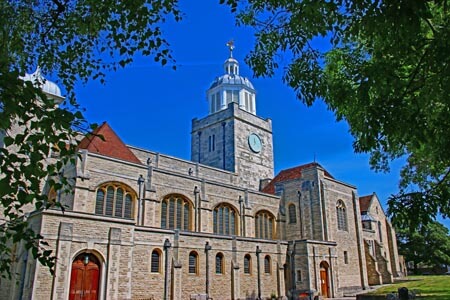
Early in September artillery gunners from Gosport, who supported the Parliamentarians, successfully fired on the town from across Portsmouth Harbour, damaging
St Thomas's church bell tower which was also being used as a watch tower. This cannon fire resulted in the destruction of the original medieval tower and the nave.
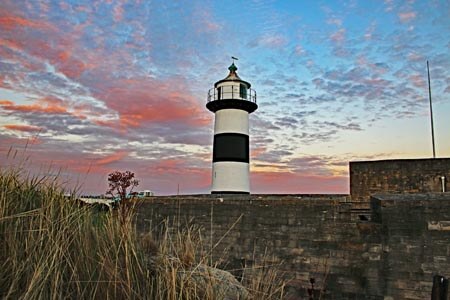
On September 2nd Waller and Urry captured Southsea Castle, without any major resistance. The capture of the castle meant that the town was now under cannon fire from three directions, from Portsea Island, from Southsea and across the harbour from Gosport.
On September 5th, with only 60 men remaining, negotiations for a surrender resumed after Goring threatened to blow up the gunpowder store at the Square Tower, but he eventually agreed to hand over the town and the magazine intact, in exchange for the freedom and lives of his men.
Goring left, sailing to Holland, as he left he threw the key to the magazine into Portsmouth Harbour, it has since been recovered and is stored at Portsmouth Museum. On September 8th William Lewis was appointed as the new Governor of Portsmouth.